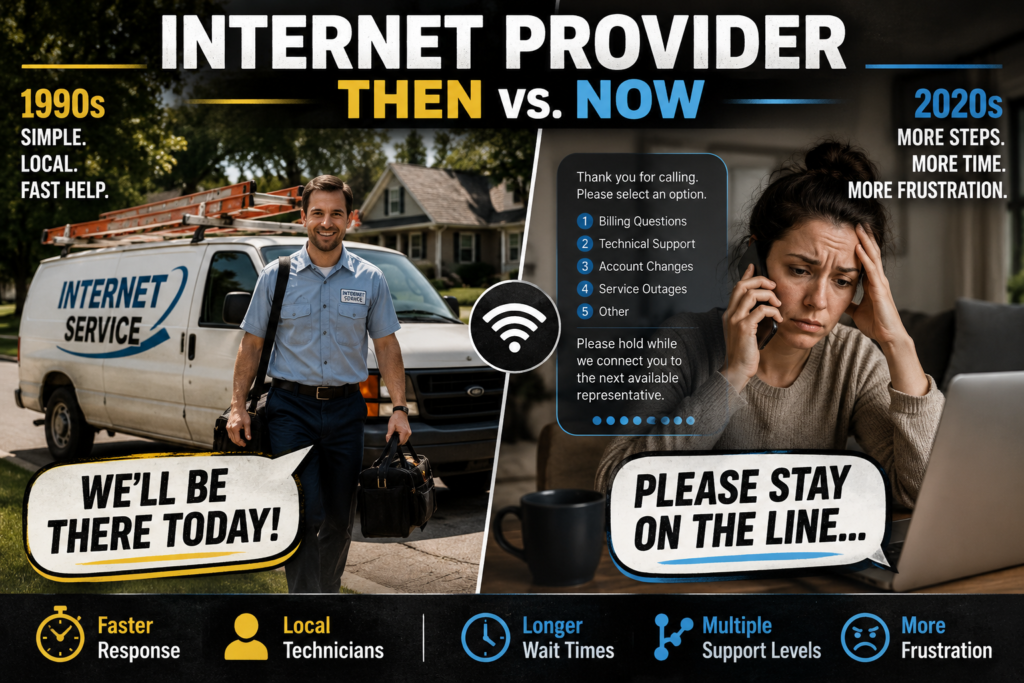
A personal perspective on app-based check-in, in-store communication, and making help accessible to every customer.
I stopped by a T-Mobile store recently to ask a simple question. At the entrance, I noticed a small sign directing customers to check in through the T-Life app. It caught my attention: an app may be convenient for many people, but not everyone will have it installed or know how to use it—especially if they came in to take care of something quick, like paying a bill.
The check-in instructions were easy to miss, and the wait did not feel especially clear. I saw two people leave after waiting, seemingly without feeling that anyone had noticed them. I can’t know exactly what was going on for each person, but it made me wonder whether a clearer welcome or a quick update from staff could have changed the experience.
Convenience should include more than one option
Using an app to manage a visit can make sense. But customers should still have a straightforward way to get help if they do not use the app, cannot access it, or simply prefer talking with a person. A staffed check-in point or an easy-to-find kiosk could help with basic tasks, such as joining the queue or making a payment, while keeping human assistance available for people who need it.
A kiosk would not replace a helpful employee. It would give customers another path—one that is visible, simple, and optional.
A communication gap can shape the whole visit
The staff I encountered were nice, but communication across the store seemed uneven. I was left wondering whether the team had enough support or training to coordinate the line; I can’t say what caused it. Near the end of my visit, an older staff member recognized that customers were waiting and started communicating with people to get them helped. That moment stood out because a little acknowledgment can go a long way.
Even when a store is busy, a brief greeting, an estimate of the wait, or a clear explanation of how to check in can help customers feel seen.
The bigger impression
This was one visit, and it is only my perspective. Still, it left me thinking about the balance between digital convenience and in-person service. If a store relies on an app-based process, the instructions need to be noticeable and there should be a simple alternative for people who do not use it.
I also left less impressed by the phone deals than I remember being in the past. That is a personal comparison, and offers can depend on a customer’s plan and circumstances. But when the in-store experience feels confusing and the value is not immediately clear, it may be harder to give customers a reason to stay.
T-Mobile has built a recognizable retail presence, and I hope it continues to make the in-store experience work for people with different needs and comfort levels. A clear welcome, better communication, and more than one way to check in would be a practical place to start.
What do you think? Should stores that use app-based check-in also offer a staffed or kiosk option for customers who prefer it